

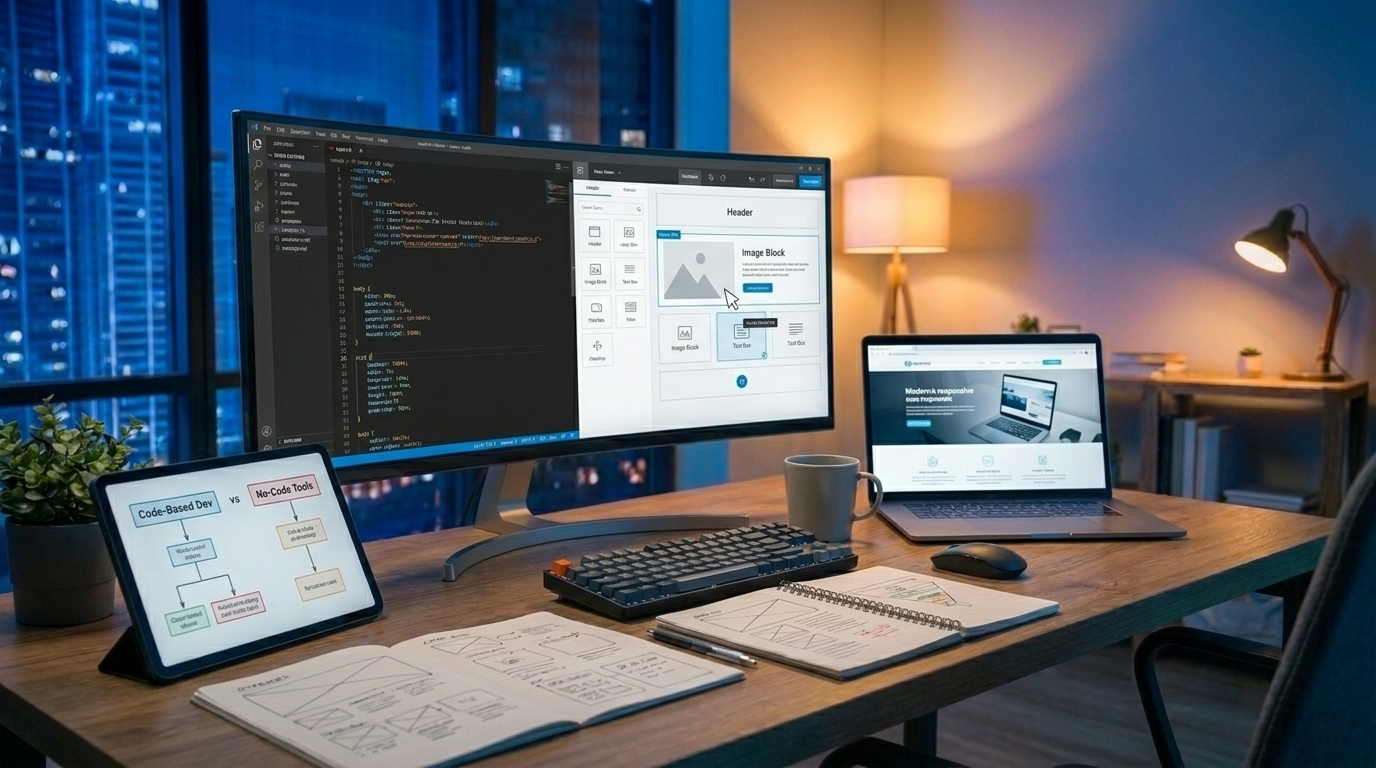
HTML and CSS are not strictly mandatory for building a website today. Tools like Wix, Webflow, and WordPress let you launch sites without writing code. Still, HTML and CSS remain the backbone of every website, and knowing them gives you far more control over design, speed, and search rankings.
Many people who want to build a website ask the same question: are HTML and CSS mandatory for website development? It is a fair question. Website builders and no-code platforms have made it possible to create a good-looking site in hours, without touching a single line of code. So why bother learning HTML and CSS at all?
The short answer is that you can build a website without writing HTML and CSS yourself. But those two languages still power everything you see online. Even when you drag and drop elements in a builder, the platform quietly writes HTML and CSS in the background.
In this guide, we will explain what HTML and CSS are, when you actually need them, and when you can skip them. We will also compare website builders with custom coding, look at real business cases, and show how the right approach depends on your goals. By the end, you will know exactly what fits your project.
What Are HTML and CSS?
HTML and CSS are the two core building blocks of the web. They work together on almost every page you visit.
HTML stands for HyperText Markup Language. It creates the structure of a web page. Headings, paragraphs, buttons, images, and links are all defined with HTML. Think of it as the skeleton of your website.
CSS stands for Cascading Style Sheets. It handles the look and feel. Colors, fonts, spacing, layouts, and animations all come from CSS. If HTML is the skeleton, CSS is the skin and clothing that make it presentable.
Here is a simple way to remember the difference:
- HTML decides what appears on the page.
- CSS decides how it looks.
Together, HTML and CSS form the foundation of front-end web development. According to the Mozilla Developer Network, HTML is the most basic building block of the web, and CSS is used to style and lay out that content. Even advanced frameworks and website builders rely on both.
Are HTML and CSS Still Mandatory for Website Development?
This is where things get interesting. The honest answer is: it depends on how you build.
You do not have to write HTML and CSS by hand to launch a website in 2026. But the languages themselves are still mandatory in a technical sense, because every website runs on them. The question is really about whether you need to write the code, or whether a tool writes it for you.
The Case for HTML and CSS
There are strong reasons to learn and use HTML and CSS directly:
- Full control: You decide exactly how every element looks and behaves.
- Clean code: Hand-written code is often lighter and faster than builder-generated code.
- Easier fixes: When something breaks, you can find and repair it quickly.
- Better SEO: Clean HTML helps search engines read and rank your pages.
- No platform limits: You are not stuck with the features a builder offers.
For businesses that want a unique, high-performance website, custom HTML and CSS remain the gold standard. This is why professional agencies still code sites by hand or fine-tune builder output.
When You Can Build Without Writing HTML and CSS
Not every project needs custom code. You can skip hand-coding when:
- You need a simple site fast, such as a portfolio or landing page.
- Your budget is tight and you want a low-cost option.
- You do not plan to make complex custom features.
- You are testing an idea and want a quick launch.
In these cases, a website builder or template can do the job well. Many small businesses start this way, then upgrade to a custom-coded site as they grow.
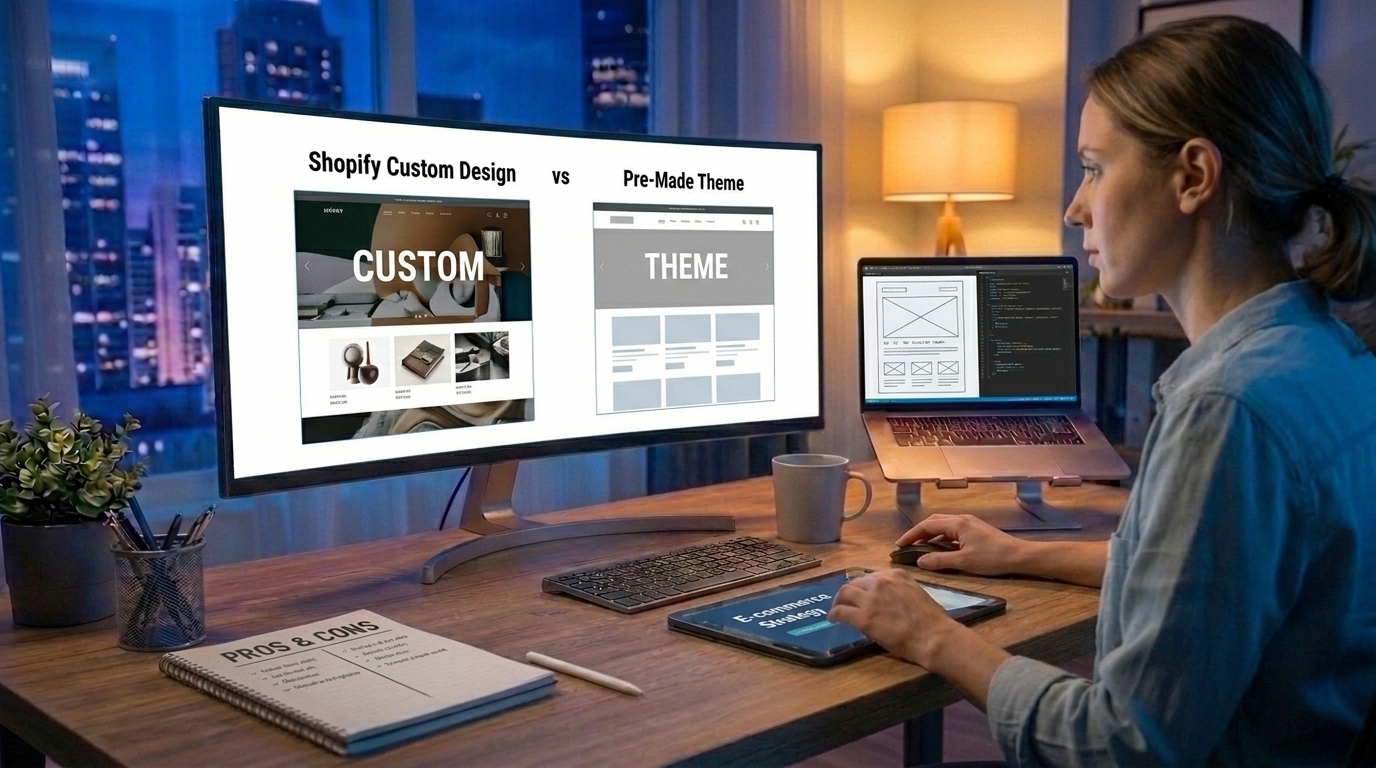
Website Builders vs. Custom Coding: What's the Difference?
Choosing between a website builder and custom coding is one of the biggest decisions you will make. Here is a clear comparison.
Website builders (like Wix, Squarespace, and Shopify):
- Fast to set up, often within a day.
- No coding knowledge needed.
- Lower upfront cost.
- Limited by templates and platform rules.
- Can slow down as you add features.
Custom coding (using HTML, CSS, and other tools):
- Full design freedom.
- Faster load times when done well.
- Scales smoothly as your business grows.
- Higher upfront cost and longer build time.
- Needs a developer or agency.
So which should you choose? Pick a website builder if speed and budget matter most and your needs are simple. Choose custom coding if you want a unique brand look, top performance, and room to scale. Many companies blend both, using a builder for speed and custom HTML and CSS for the parts that need polish.
If you are unsure which path fits your business, the team at Razen Creations LLC can help you decide. Get a free consultation to review your goals before you commit.
Why HTML and CSS Still Matter Even in 2026
Some people assume that no-code tools have made HTML and CSS obsolete. That is not true. These languages still shape three things that make or break a website.
Performance and Speed
Site speed affects both users and rankings. According to Google, page speed is a ranking factor, and slow pages lead to higher bounce rates. Clean HTML and CSS load faster because there is less unnecessary code. Builder-generated sites often carry extra code that can slow things down. When speed is critical, hand-tuned HTML and CSS win.
SEO and Search Engine Visibility
Search engines read your HTML to understand your content. Proper headings, alt text, and semantic tags all help your pages rank. Well-structured HTML and CSS make your site easier for search engines to crawl. This is a core part of any strong digital marketing strategy, since good code and good SEO go hand in hand.
Design Flexibility and Customization
Templates look great until you want something the template cannot do. With CSS, you can create any layout, animation, or brand style you can imagine. This freedom matters for businesses that want to stand out instead of blending in with other template users. Strong UI/UX design depends on this level of control.
Real Business Scenarios: When Does Coding Knowledge Matter?
Let us look at practical examples. Coding knowledge matters more in some situations than others.
- A local bakery wants a simple menu site. A website builder works fine here. HTML and CSS knowledge is a bonus but not required.
- A startup wants a custom web app with user logins. This needs real development. HTML, CSS, and back-end code are essential. This is where custom software development comes in.
- An online store expects heavy traffic and thousands of products. Performance and structure are critical. Custom coding or a heavily optimized platform is the smart choice.
- An author wants to publish and sell an ebook. The focus shifts to formatting and distribution rather than heavy coding. Services like ebook publishing fit better here.
- A brand wants a mobile app to match its website. This requires mobile app development skills that go beyond basic HTML and CSS.
The pattern is clear. Simple projects can skip hand-coding. Complex, high-growth projects benefit from real coding expertise.
No-Code and Low-Code Platforms: Are They Enough?
No-code and low-code platforms have grown fast. According to Gartner, low-code development is a rapidly expanding part of the software market. These tools are powerful and improving every year.
But are they enough on their own? For many small projects, yes. For others, no. Here is how to think about it:
- No-code platforms (Wix, Webflow, Bubble): Great for simple sites and quick launches. Limited when you need deep customization.
- Low-code platforms: Offer more flexibility and let developers add custom code. A good middle ground.
- Full custom development: Best for complex, scalable, or high-performance needs.
No-code tools remove the need to write HTML and CSS for basic sites. They do not remove the value of knowing HTML and CSS when you want full control. Even skilled developers use these tools to save time, then add custom code where it counts.
How Razen Creations LLC Approaches Website Development
At Razen Creations LLC, we believe the right approach depends on your goals, not on trends. Some clients need a fast, affordable site. Others need a fully custom platform built from the ground up. We match the method to the mission.
Our team offers complete web design and development services, using clean HTML and CSS where custom work is needed and trusted platforms where speed matters. We focus on responsive design, fast load times, and smooth user experiences that turn visitors into customers.
Beyond websites, we provide a full range of digital services:
- Custom software development for tools that automate and scale your business.
- Mobile app development for iOS and Android.
- UI/UX design that makes your product intuitive and enjoyable.
- Digital marketing including SEO, PPC, and social media.
- Ebook publishing for authors and businesses sharing their knowledge.
Whether you need a simple landing page or a complex web application, we help you choose the smartest path. Work with Razen Creations LLC to build a website that fits your business today and grows with it tomorrow.
Final Thoughts: Do You Really Need HTML and CSS?
So, are HTML and CSS mandatory for website development? Not in the sense that you must write them yourself. Modern tools let anyone launch a website without coding. But HTML and CSS still power every site on the internet, and understanding them gives you real advantages in speed, SEO, and design.
Here is the simple takeaway:
- Choose a website builder if you want speed, low cost, and a simple site.
- Choose custom HTML and CSS if you want top performance, full control, and room to grow.
- Blend both when you want the best of speed and quality.
The best choice depends on where your business is headed. If you want expert guidance, contact our team at Razen Creations LLC. We will help you build a website that works hard for your brand.
Frequently Asked Questions
1. Do I need to know HTML and CSS to build a website?
No. You can use website builders like Wix, Squarespace, or WordPress to create a site without writing code. However, knowing HTML and CSS gives you more control over design, speed, and SEO.
2. Are HTML and CSS still relevant in 2026?
Yes. Every website still runs on HTML and CSS, even those built with no-code tools. These languages remain the foundation of the web and are far from obsolete.
3. Is it better to use a website builder or custom coding?
It depends on your needs. Website builders are best for simple, fast, low-cost sites. Custom coding is better for unique designs, high performance, and long-term growth.
4. Can no-code platforms fully replace HTML and CSS?
For simple websites, yes. For complex, high-traffic, or highly customized sites, no. Custom HTML and CSS still offer the most control and best performance.
5. Does HTML and CSS affect SEO?
Yes. Search engines read your HTML to understand and rank your content. Clean, well-structured HTML and CSS help your site load faster and rank higher.
6. How long does it take to build a website?
A simple website can take two to four weeks. Complex sites or web apps can take several months, depending on features and design needs.
7. Can Razen Creations LLC build both simple and custom websites?
Yes. Razen Creations LLC offers both quick, affordable sites and fully custom-coded platforms, along with software, mobile apps, UI/UX design, and digital marketing.